
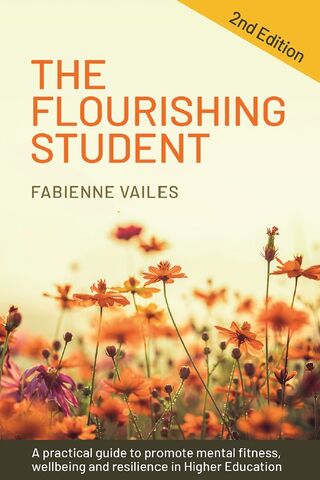
Resource: Fabienne Vailes / made use of with authorization
As a clinician whose caseload is mostly comprised of university learners, school, and personnel, I really feel privileged to have my pulse on some of the current trends in bigger education and learning. I was therefore intrigued to chat with educator and linguist Fabienne Vailes, who is on a quest to reform better education with a target on psychological wellness. In her new e-book, The Flourishing Pupil: A Functional Manual to Promoting Mental Well being, Well-becoming and Resilience in Higher Schooling, Vailes describes what she calls the Flourishing Product (FM) of education and learning, which she hopes can provide as an inspiration to reform the education ecosystems that have been failing young children due to their restricted aim on mental well being.
In her guide, Vailes picks up wherever Sir Ken Robinson leaves off in his TED Converse on switching education paradigms, which implicates the industrial-era assembly line model of training as it minimizes students’ specific requirements. Ms. Vailes requires matters a phase even further by emphasizing the relevance of equally psychological overall health and pupil contributions to the curriculum of higher training. Vailes paraphrases Robert Kegan’s developmental model, suggesting that to face up to the variety of distress that education and learning involves, primarily in higher education, a single demands to sense psychologically safe and sound. In an work to support students sense psychologically protected, Vailes hopes to encourage increased schooling institutions to consider, if not adopt, 1 of the reform models reviewed in the guide.
Distinct types of educational reform
The types that Vailes explores all utilize a devices approach, as outlined by programs theorist Peter Senge. This solution identifies pupils in just their academic methods as holons—autonomous models inside them selves that are also sections of a larger complete, like bouquets in a backyard or cells in the body—with each individual student remaining allowed to co-develop the instructional system of which they are a component. One such product mentioned in The Flourishing University student is the College Mental Wellbeing Charter. Made by Hughes and Spanner (2019), the Charter provides a set of proof-informed concepts that aid a “total college” strategy to psychological overall health and very well-staying.
The University of Gloucestershire (UoG) in the United Kingdom is on the slicing edge with regard to applying the University Mental Wellness Charter, as it was 1 of the first 41 universities to be element of the College Mental Overall health Charter Method in 2021-22. Primary the demand at the UoG are Vailes’s collaborators: Professor Jenny Hill, Head of Discovering and Instructing Innovation, and Anna Hay, Head of Scholar Properly-Remaining.
According to Hill and Hay, the extended-term target of the UoG’s reform endeavours is a a few-calendar year method in which a team of learners from diverse demographic and academic backgrounds is associated in a steady procedure of curriculum structure, supply, assessment, and assist for studying, with psychological effectively-becoming at the main of every element.
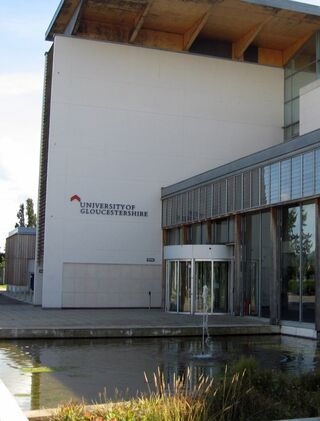
The University of Gloucestershire: Prioritizing Psychological Wellbeing in Greater Schooling Reform
Source: Jongleur100/Wikimedia Commons
At UoG, these initiatives are supported by sources and workshops with the objective of rising students’ feeling of belonging bolstering assets for college student psychological overall health support focus on education for team on psychological wellbeing and effectively-getting growing accessibility to actual physical wellness routines and the development of other expertise for transitioning out of university existence.
In addition to the University Mental Well being Constitution, Vailes also discusses the Appreciative Inquiry (AI) design in her e book. Formulated by Dr. Michelle McQuaid and Dr. David Cooperrider, the AI model focuses on earning the recipients of reform stakeholders in the reformation course of action. In a latest podcast job interview, Dr. Peggy Kern of the University of Melbourne’s Graduate University of Education and learning suggests that applying AI to increased training reform requires faculty and employees to determine “perfectly-being” for just about every school and then prioritize recruiting and schooling with this definition in mind. In addition, college students are brought into the method to give regular, qualitative opinions about how they expertise their learning environment about the matter of very well-becoming.
Prioritizing mental wellbeing in higher instruction is something Vailes and I both equally keep dear mainly because we every believe that when it will come to the neurological, psychological, and social growth of youthful grown ups, 25 is the new 18. As these types of, the ages that most students go after their undergraduate and graduate research lie before they have arrived at comprehensive neurological and psychological maturation. Offered all of the alterations and stressors affiliated with university lifetime, this may perhaps be a most important purpose why the median age of onset for psychotic disorders extends from the late teens via the early 20s (Kessler, et al., 2007). Thus, we should really consider heed of the tips that Vailes and her colleagues make in The Flourishing Pupil so that the potential of increased instruction can arise from a soil enriched with the psychological well-getting of its stakeholders.



More Stories
P Shot London: A Complete Guide to Improving Male Intimate Wellness Naturally
Unlock the Secret to a Healthier, Happier You—One Small Step at a Time
Unlock the Secret Code to Health: Why Literacy Saves Lives Every Day